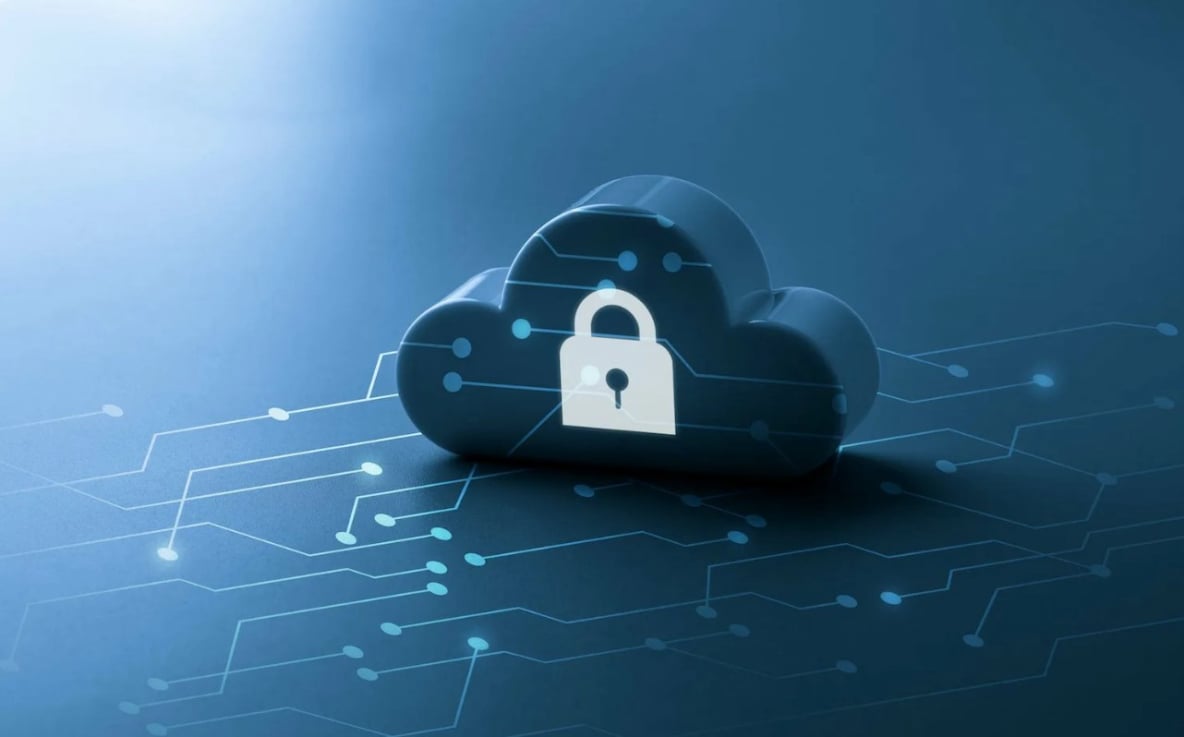
Enhancing Enterprise Security and Compliance in the Cloud
The shared responsibility model of cloud security is often misunderstood, leading to dangerous gaps in an organization's defense posture. While the cloud provider secures the underlying infrastructure, the customer is unequivocally responsible for securing their data, applications, identities, and configurations within that infrastructure. Enhancing security in this environment requires a fundamental mindset shift: from a perimeter-based castle-and-moat defense to a zero-trust, "assume breach" model where continuous verification and least-privilege access are paramount across a dynamic and porous digital estate.
The first critical layer is establishing ironclad identity and access management (IAM). This is the new security perimeter. Multi-factor authentication (MFA) must be mandatory for all users, especially those with privileged access. The principle of least privilege should govern every permission, ensuring individuals and systems have only the access absolutely necessary to perform their function. Just-in-time access mechanisms can further reduce risk by granting elevated permissions for specific, approved tasks only when needed, rather than maintaining standing privileges that could be exploited.
Network security transforms from fixed hardware boundaries to software-defined perimeters and micro-segmentation. Instead of relying on a single corporate firewall, security policies are attached directly to workloads and data. We architect virtual private clouds (VPCs) with strict subnets, implement next-generation web application firewalls (WAFs) to protect public-facing apps, and use cloud-native tools to enforce micro-segmentation. This limits lateral movement, ensuring that even if an attacker breaches one component, they cannot easily pivot to access sensitive data or critical systems in another segment.
Proactive data protection involves encryption at all states—in transit and at rest—using keys managed by the customer for maximum control. Beyond encryption, robust data loss prevention (DLP) policies must be configured to classify sensitive information (like intellectual property or personal data) and monitor for suspicious exfiltration attempts. Automated backups with immutable storage and well-rehearsed disaster recovery plans are non-negotiable for ensuring business continuity and resilience against ransomware or catastrophic data loss.
Continuous compliance and threat detection are enabled through automation and AI-driven monitoring. Security information and event management (SIEM) tools are fed logs from all cloud services, applications, and network flows, creating a centralized view for analysis. Automated compliance scanners continuously check configurations against industry benchmarks (like CIS) and regulatory standards (like SOC 2, HIPAA), flagging deviations in real time. Threat detection services use machine learning to establish behavioral baselines and alert on anomalous activity that could indicate a compromise, enabling rapid response.
Ultimately, building a mature cloud security posture requires integrating these practices into the DevOps lifecycle itself—a practice known as DevSecOps. Security checks, vulnerability scanning, and compliance validation are automated and embedded into the CI/CD pipeline. Infrastructure is defined and deployed as secure, auditable code. This cultural and procedural integration ensures that security is not a bottleneck applied at the end of development but is a foundational, enabling property of every application and workload from its inception, creating an environment that is both agile and inherently secure.